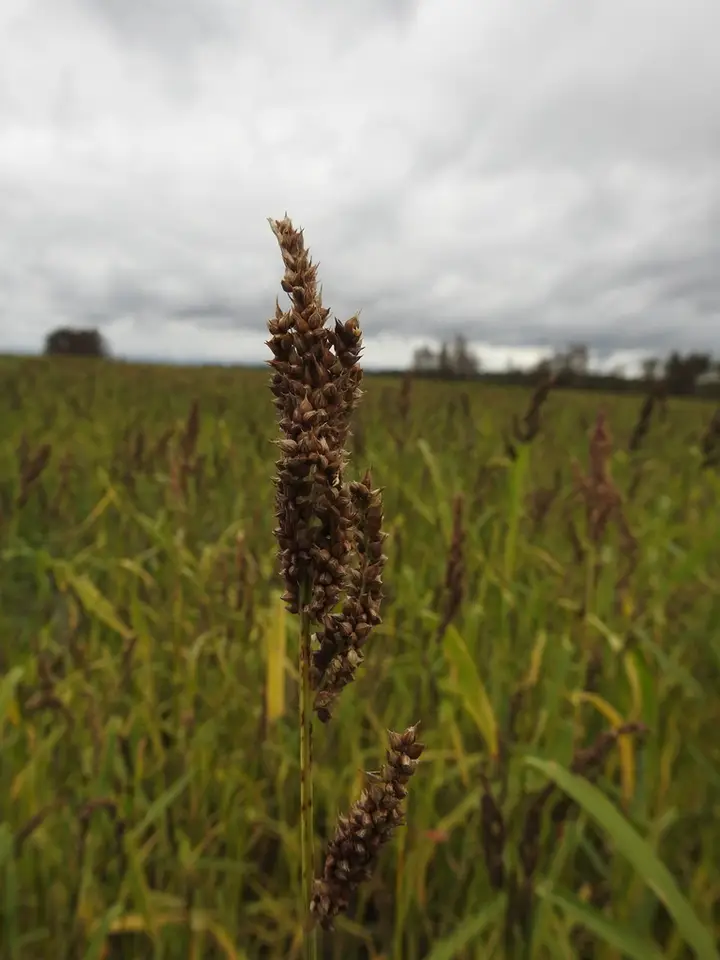
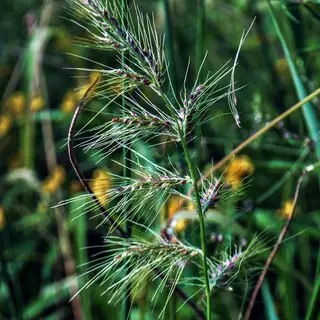
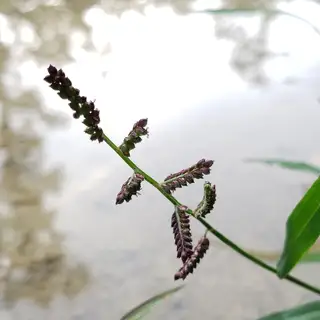
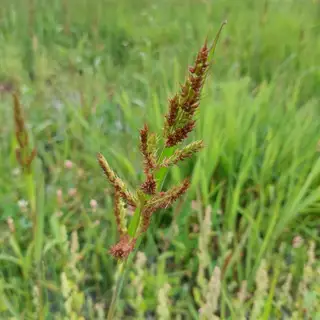
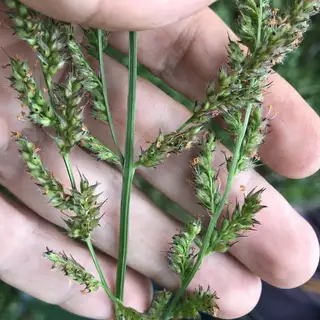
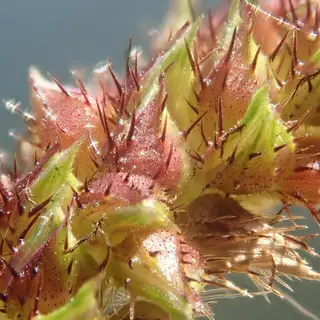
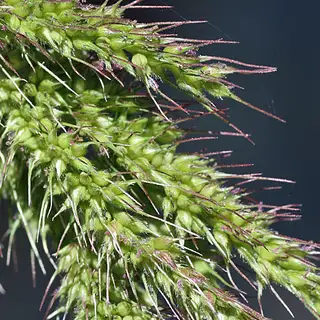
Echinochloa esculenta or Echinochloa utilis is a type of millet originating from East Asia, and is part of the Poaceae family, making it a grass. E. esculenta is colloquially known as Japanese millet, but possesses many other names, such as: Japanese barnyard millet, marsh millet, Siberian millet, and white millet. Its primary usage in the US is for forage and for wildlife habitats. In Japan, Korea and northeastern China, the millet is grown on a small scale primarily for fodder. Japanese millet is not a main cereal crop, and is therefore considered an alternative crop.
Echinochloa species are generally considered to be short-lived, tropical short-day C4 plants that possess high vitality in humid conditions. Seeding is done in spring and flowering takes place in mid summer. Species from this genus show strong adaptation to soils with poor drainage and low fertility.