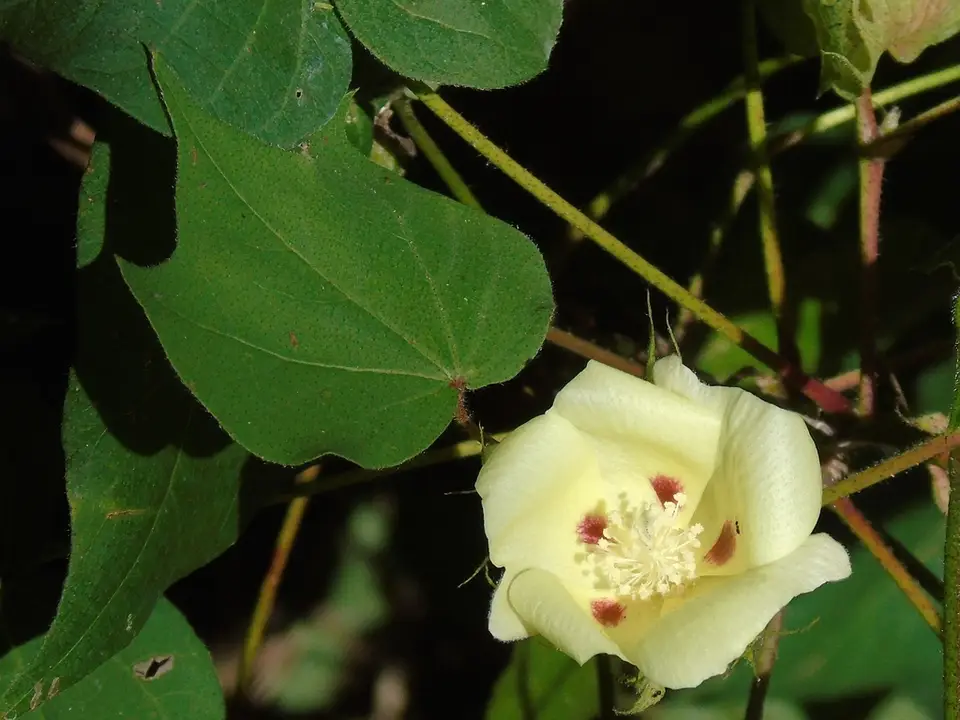
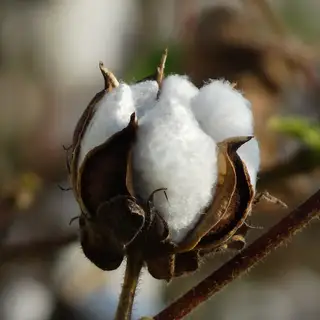
Gossypium hirsutum, also known as upland cotton or Mexican cotton, is the most widely planted species of cotton in the world. Globally, about 90% of all cotton production is of cultivars derived from this species. In the United States, the world's largest exporter of cotton, it constitutes approximately 95% of all cotton production. It is native from Mexico to Ecuador and northeast Brazil, the Leeward Antilles in the Caribbean and the Pacific (Fiji, Marianas, Polynesia and Revillagigedo Islands).
It is believed that Gossypium hirsutum was created when a wild Mexican cotton species mixed with the wild African species Gossypium herbaceum around 5–10 million years ago, producing a hybrid species with four pairs of chromosomes (totaling 52 chromosomes) via polyploidy.
The original native range of Gossyypium hirsutum centers on the Yucatán Peninsula, where researchers have found the greatest genetic diversity among samples taken from the wild.
Archeological evidence from the Tehuacan Valley in Mexico shows the cultivation of this species as long ago as 3,500 BC, although there is as yet no evidence as to exactly where it may have been first domesticated. This is the earliest evidence of cotton cultivation in the Americas found thus far.