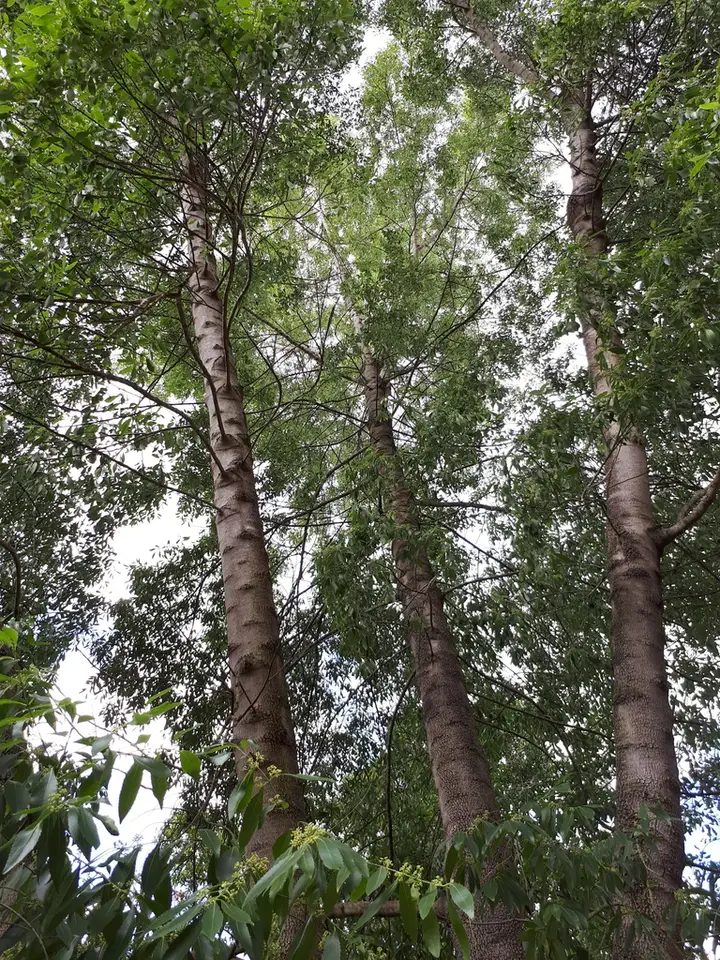
Khat or qat (Catha edulis), also known as Bushman's tea in South Africa, is a species of flowering plant in the family Celastraceae, and the sole species in the genus Catha. It is a shrub or tree native to eastern and southern Africa, ranging from Ethiopia and South Sudan to Angola and the Cape Provinces of South Africa. It grows in montane riverine and evergreen forests from 1,100 to 2,400 metres (3600 to 7900 feet) elevation.
It has a history of cultivation originating in the Harar region of Ethiopia, and it was subsequently introduced at different times to countries nearby in East Africa and South Arabia, notably Somalia and Yemen. Cultivated by farmers, its leaves are sold on the market to be chewed as a recreational stimulant. The world's largest consumers are East Africans, particularly Somalis, and nearby Yemen, with the largest producers/exporters being Ethiopia and Kenya.
Khat contains the alkaloid cathinone, a stimulant which causes greater sociability, excitement, mild loss of appetite and mild euphoria. Among communities from the areas where the plant is native, khat-chewing has historical relevance (as a social custom, especially among men) dating back thousands of years, analogous—but slightly different—to the use of coca leaves in South America's Andes Mountains or the betel nut preparations in South Asia.
Since 1980, the World Health Organization (WHO) classifies khat as a "drug of abuse" that can produce psychological dependence, although the WHO does not consider khat addiction to be a serious global problem.